Skip to content
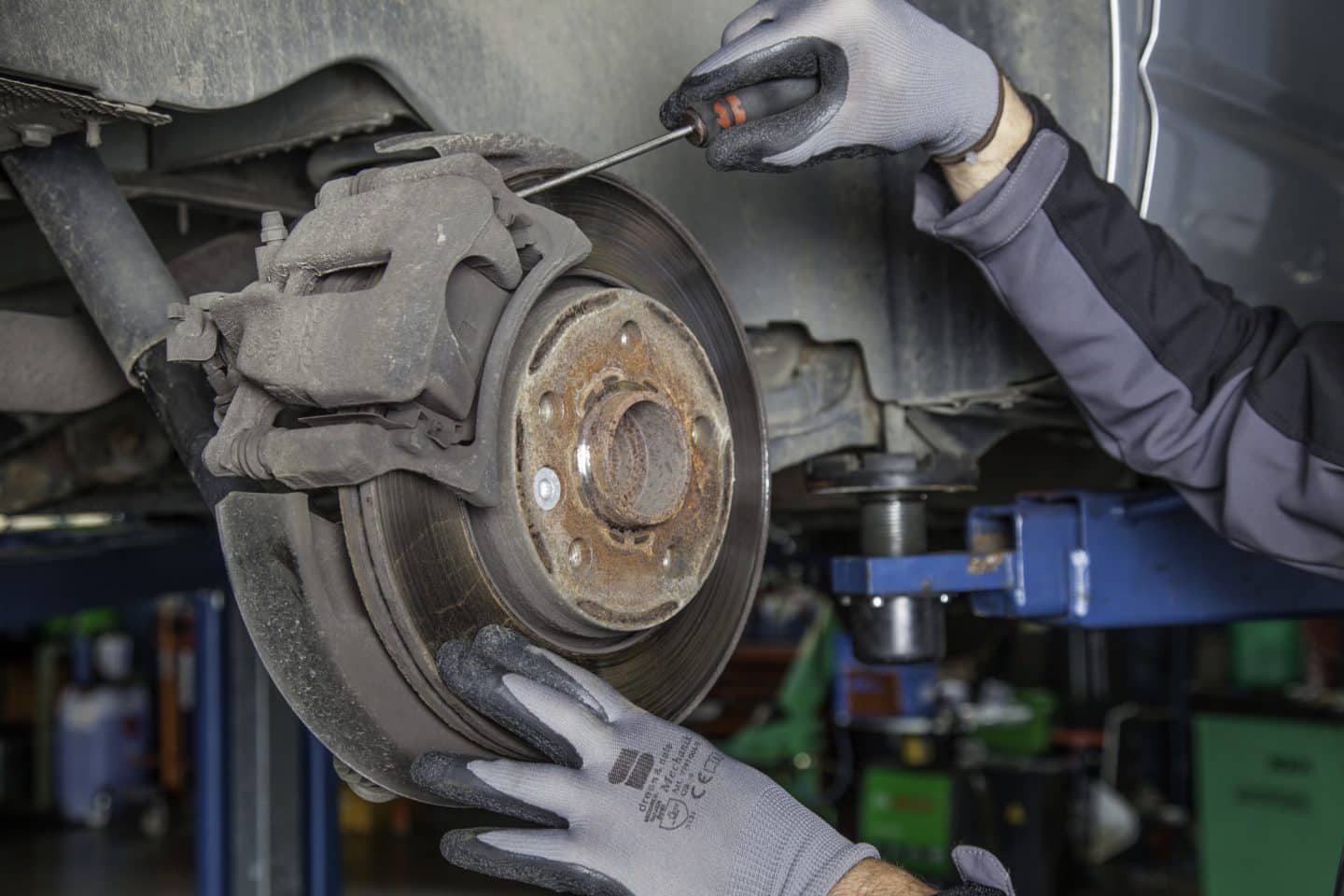
Your vehicle’s braking system is arguably its most important safety feature. The ability to slow down and stop reliably and predictably is something we depend on every time we get behind the wheel. Because your brakes are so critical, it is essential to pay close attention to any changes in their performance. New sounds or a different feeling in the brake pedal are your car’s way of telling you that the system needs professional attention. Ignoring these warning signs can be incredibly dangerous and can lead to a much more expensive repair down the road.
Understanding the Sounds of Your Brakes
Your brakes will often give you auditory clues when they are wearing out.
- A High-Pitched Squeal: This is the most common sound of worn brakes. Most modern brake pads are manufactured with a small metal “wear indicator.” When the brake pad material wears down to a certain minimum thickness, this small metal tab will begin to make contact with the metal brake rotor, producing a high-pitched squealing or screeching sound whenever you apply the brakes (and sometimes when you’re not). This sound is a built-in warning sign telling you that it’s time to replace your brake pads.
- A Loud Grinding or Growling Noise: This is a much more serious warning sign. A loud, metallic grinding sound means that your pads have worn down completely, and you now have metal-on-metal contact between the caliper and the rotor. This is not only extremely dangerous, as it dramatically reduces your stopping power, but it is also causing severe damage to your brake rotors, which will now also need to be replaced. If you hear a grinding noise, you should have your brakes inspected immediately.
Understanding the Feeling of Your Brakes
You can also feel a problem in your brake pedal or steering wheel.
- A “Spongy” or Soft Brake Pedal: If your brake pedal feels soft and mushy or sinks further toward the floor than usual, it is often a sign of air or moisture in the brake lines or a problem with the master cylinder. The braking system is a hydraulic system, and it should feel firm and responsive. A spongy pedal indicates a serious problem that needs immediate diagnosis.
- Vibration or Pulsating in the Pedal: If you feel a shaking or pulsating in the brake pedal or the steering wheel when you apply the brakes, especially when stopping from a high speed, it is a classic sign that your brake rotors are warped. The rotors are the metal discs that the pads clamp onto. Over time, the intense heat of braking can cause them to become uneven. This pulsation is the pads moving over the warped surface.
- Your Car Pulls to One Side When Braking: If your car veers to the left or right when you apply the brakes, it could be a sign of a stuck caliper or a collapsed brake hose on one side of the vehicle, causing the brakes to be applied unevenly.
As the Car Care Council, a non-profit consumer education group, emphasizes, regular inspections are a critical part of vehicle maintenance and safety.
Your Dallas Brake Service Experts
The safety of you and your family depends on a properly functioning braking system. Do not ignore any of these common warning signs. For drivers in the Dallas, TX area, the certified technicians at Allstate Transmissions & Auto Repair can perform a thorough inspection and provide expert brake service. Contact us today to schedule a brake inspection.