Skip to content
You’re driving down a straight stretch of road, you take your hands off the steering wheel for just a second, and your car immediately starts to drift or pull to the left or right. Or maybe you’ve noticed that your steering wheel is crooked and off-center even when you’re driving straight. These are classic signs that your car is in need of a wheel alignment. A proper alignment is crucial not only for the safety and handling of your vehicle but also for preventing premature and expensive wear on your tires. It’s a key piece of preventative maintenance that is often overlooked.
What is a Wheel Alignment?
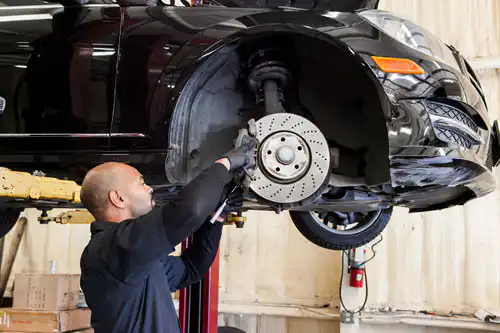
A wheel alignment does not involve adjusting the wheels or tires themselves. It is a precise adjustment of your car’s suspension system—the system that connects your vehicle to its wheels. The goal of an alignment is to adjust the angles of your tires so that they make contact with the road in the correct way. A professional technician uses a highly sophisticated alignment machine with lasers and sensors to measure and adjust three key angles:
- Camber: This is the inward or outward tilt of the top of the tire when viewed from the front of the vehicle. Too much negative (inward) or positive (outward) camber can cause uneven tire wear.
- Toe: This is the direction the tires are pointing relative to each other, like your feet. “Toe-in” means the front of the tires are pointing slightly inward, and “toe-out” means they are pointing outward. An improper toe angle is the primary cause of rapid and premature tire wear.
- Caster: This is the angle of your steering axis when viewed from the side of the vehicle. Caster affects your directional stability and steering.
What Causes Your Alignment to Go Out?
Your car’s alignment can be knocked out of specification by the normal wear and tear of driving, but it is most often caused by a sudden jolt or impact.
- Potholes: Hitting a deep pothole, especially at speed, is one of the most common causes of alignment problems.
- Hitting a Curb: Accidentally bumping or driving over a curb can easily throw your alignment out.
- Minor Accidents: Even a small fender bender can be enough to bend a suspension component and affect the alignment.
- Worn Suspension Parts: As your car ages, suspension components like ball joints, tie rods, and bushings can wear out, which will also affect your alignment.
The Major Benefits of a Proper Alignment
Keeping your car in proper alignment is important for several reasons.
- Increased Tire Life: This is the biggest financial benefit. A misaligned car can destroy a brand-new set of tires in just a few thousand miles by causing the tread to wear down unevenly. A proper alignment ensures your tires wear evenly, allowing you to get the full, intended lifespan out of your investment.
- Improved Fuel Efficiency: When your tires are fighting against each other due to a bad alignment, it increases the “rolling resistance,” which means your engine has to work harder to move the car forward. This can lead to a noticeable decrease in your fuel economy.
- Safer Handling: A proper alignment ensures that your car tracks straight and handles predictably. It improves your vehicle’s stability and makes it safer to drive, especially at highway speeds.
As safety organizations like the National Highway Traffic Safety Administration (NHTSA) and the Car Care Council consistently advise, regular tire and suspension checks are a critical part of vehicle safety.
Your Dallas Alignment Service Experts
If you notice your car pulling to one side, your steering wheel is off-center, or your tires are showing uneven wear, it’s time for an alignment check. For drivers in the Dallas, TX area, the experienced technicians at Allstate Transmissions & Auto Repair use state-of-the-art equipment to provide precise alignment services. Contact us today to schedule your service.